Why Weight Loss Feels Harder Now—and the One Habit to Start With: Protein First
Category: Healthy Weight
If weight loss feels harder than it used to, I want you to hear this first: your body isn’t broken.
January can feel loud—detoxes, challenges, “reset” pressure, and the idea that you need to fix everything all at once. But what if this year starts differently?
What if you chose a calmer approach—one that works with your body instead of fighting it?
Quick takeaway: If weight loss feels harder, it’s often not a willpower issue. As we get older, stress, sleep, muscle, and meal satisfaction matter more. Start with one simple habit: protein first (especially at breakfast) to feel more satisfied, support lean muscle, and reduce cravings.
Why weight loss feels harder than it used to
Many of us were taught that healthy weight comes down to willpower:
- Eat less
- Move more
- Try harder
And for a while, that might have worked.
But over time, a lot of people hit a frustrating point: they’re doing “all the right things,” and it still feels harder than ever.
That doesn’t mean you failed. It often means your body has changed.
As we get older—and as life gets fuller—factors like stress, sleep quality, lean muscle, and how supported you feel after meals can matter more than sheer effort.
When your body feels under-supported, it pushes back. That’s not weakness. That’s biology.
A helpful shift: it’s often a support problem, not a motivation problem
You may have noticed health conversations shifting recently. People talk more about how the body responds to food—not just how much you eat, but how you feel after you eat.
When people feel constantly hungry, drained, or stuck in cravings, it’s not always a discipline issue. Often it’s a support issue.
If your meals leave you…
- hungry again an hour later
- dragging mid-afternoon
- constantly thinking about food
- pulled toward snacks and sweets
…your body may be asking for something different—not more willpower.
One habit to start with: Protein first
Instead of changing everything in January, try one foundational habit:
Protein first. Just one thing.
Not more rules. Not fewer calories. Not restriction.
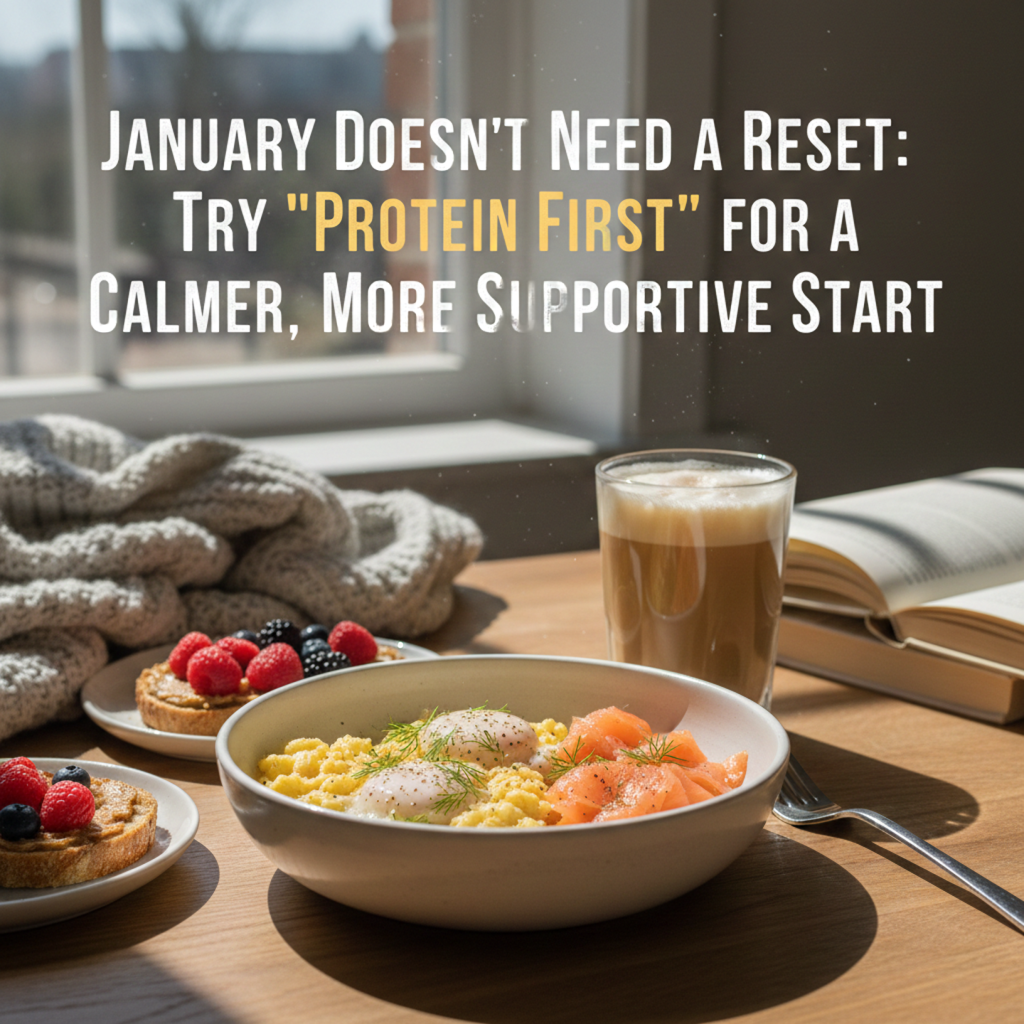
Protein-first means you choose your protein source first, then build the rest of the meal around it.
Why it helps:
- More satisfaction after meals (less “I need a snack” energy)
- Supports lean muscle (which matters more over time)
- Steadier energy (especially in the afternoon)
- Less constant pull toward cravings
Many people unintentionally under-eat protein—especially at breakfast—and then spend the rest of the day trying to manage hunger.
This isn’t about eating more food. It’s about eating more supportive food. And when your body feels supported, everything else gets easier.
How to do protein-first (without overcomplicating it)
You don’t have to be perfect. You just need something repeatable.
A simple 7-day plan
- Choose one meal to improve first (breakfast is often the easiest win).
- Add a protein anchor to that meal.
- Pair it with fiber (fruit, veggies, oats, beans) to stay satisfied longer.
- Create a backup option for busy days.
Easy protein-first ideas
- Eggs + fruit or veggies
- Greek yogurt + berries + chia
- Cottage cheese + fruit
- Leftovers that include chicken, tuna, tofu, or beans
- A simple protein shake/smoothie when time is tight
Whole foods vs. supplements: both can work
Some people prefer getting protein from whole foods. Others like having a simple option they can rely on when life gets busy.
A protein supplement can be helpful—especially if it makes your routine easier to stick with.
What to look for in a protein supplement
- clean, simple ingredients
- a complete amino acid profile
- minimal sugar
- how it digests (how it feels in your stomach)
- whether it fits into real life consistently
I personally use Shaklee protein options because they check those boxes for me.
- Life Shake when I want something more substantial—like a meal or smoothie base
- Sparkling Protein when I want something lighter and refreshing (more like a flavored sparkling drink than a heavy shake)
I like Sparkling Protein for those moments when I don’t want something heavy, but I still want to support my routine—especially mid-afternoon or when I’d normally reach for something sweet. It’s also easy to mix with different flavors and can make a fun base for protein-packed mocktails.
Key takeaways
- If weight loss feels harder than it used to, your body isn’t broken.
- What used to work may stop working because your body’s needs change over time.
- Feeling hungry and stuck often signals a support gap, not a motivation gap.
- Start January with one habit: protein first—especially at breakfast.
- Small supportive habits are what create lasting change.
Want the one-page guide?
I put together a simple one-page guide that walks through this idea—no hype, no pressure—just a smarter way to start.
If you’d like it, comment “RESET” and I’ll send it to you.
FAQ: Protein, cravings, and why this works
Why does weight loss feel harder after 40?
Because factors like stress, sleep, muscle, and recovery can influence appetite, energy, and how supported you feel after meals. It’s not always about “trying harder.”
Can protein help with cravings?
It often helps because protein can make meals more satisfying, which can reduce the pull toward snacks—especially later in the day.
What if I don’t like protein shakes?
No problem—whole food protein works great. The goal is simply to include a protein anchor at meals. Supplements are optional.
What’s the easiest place to start?
Breakfast. Many people under-eat protein early, which can set up hunger and cravings later.
How long should I try this before changing anything else?
Give it 7 days with one consistent meal change. The goal is to build a habit that feels doable, not perfect.
Final thought: January doesn’t have to be about fixing yourself. It can be about supporting yourself—one habit at a time. That’s how real change lasts. And by the end of the year, you can be in a very different place.
Friendly note: This is general wellness education, not medical advice. If you have a medical condition or specific nutrition needs, it’s wise to check with a qualified professional.